
In today’s fast-paced academic life, students often spend long hours studying, attending online classes, or using mobile devices. This sedentary lifestyle can lead to poor posture, weight gain, stress, and lack of concentration. Following a daily exercise routine for students is one of the best ways to improve physical fitness, mental health, and academic performance.
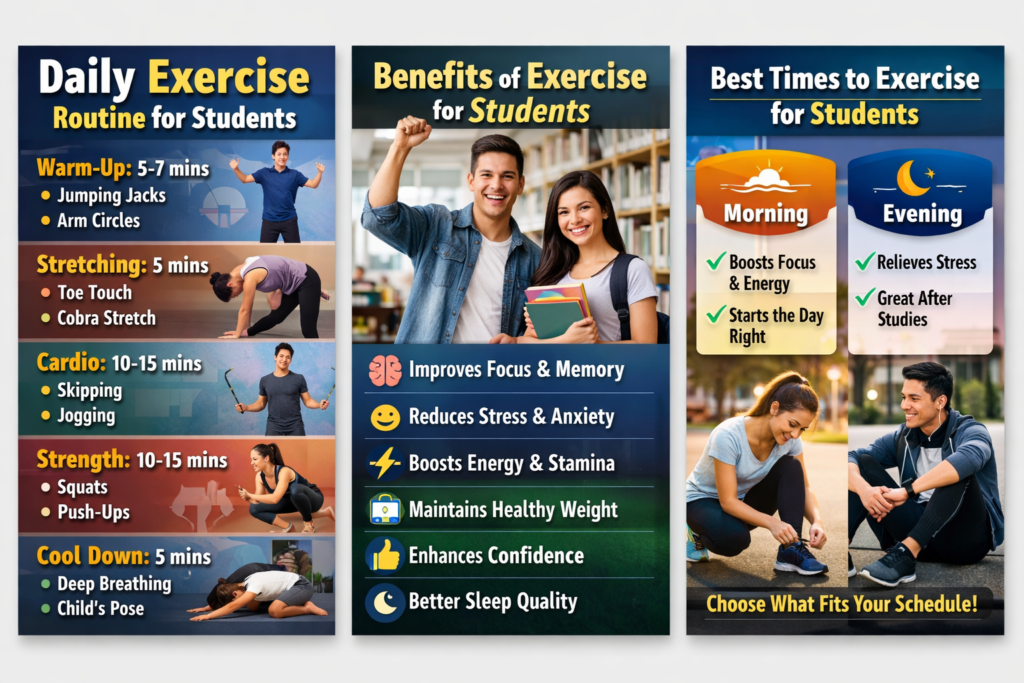
The routine shared below focuses on realistic exercises that students can easily follow at home or outdoors without special equipment.
Why Daily Exercise Is Important for Students
Regular physical activity plays a crucial role in a student’s overall development.
Regular exercise supports both physical health and academic success in multiple ways.

- Improves concentration and memory
- Reduces stress, anxiety, and exam pressure
- Boosts energy levels and stamina
- Maintains healthy body weight
- Enhances confidence and self-discipline
- Promotes better sleep quality
Many health guidelines suggest that students benefit from 30–60 minutes of daily physical activity.
Ideal Daily Exercise Routine for Students (30–45 Minutes)
This routine is designed to balance movement, strength, and relaxation without overwhelming a student’s daily schedule.
1. Warm-Up (5–7 Minutes)
Warming up prepares the body for exercise and prevents injuries.
Warm-up exercises:
- Neck rotations – 10 reps
- Arm circles – 20 seconds
- Shoulder rolls – 10 reps
- Jumping jacks – 1 minute
- Light jogging in place – 2 minutes
2. Stretching Exercises (5 Minutes)
Stretching improves flexibility and posture, especially important for students who sit for long hours.
Best stretches for students:
- Toe touch stretch
- Side bends
- Cobra stretch
- Standing quad stretch
- Shoulder stretch
Hold each stretch for 15–20 seconds.
3. Cardio Exercises (10–15 Minutes)
Cardio helps improve heart health and burns calories.
Simple cardio options for students:
- Skipping rope
- Brisk walking
- Running or jogging
- Cycling
- Dancing
👉 Choose any one activity based on interest to stay consistent.
4. Strength & Bodyweight Exercises (10–15 Minutes)
These exercises build muscle strength and improve posture.
Beginner bodyweight routine:
- Squats – 15 reps
- Push-ups (knee or wall) – 10 reps
- Plank – 30 seconds
- Lunges – 10 reps each leg
- Crunches – 15 reps
5. Cool-Down & Breathing (5 Minutes)
Cooling down relaxes muscles and reduces soreness.
Cool-down activities:
- Deep breathing exercises
- Child’s pose
- Seated forward bend
- Meditation for 2–3 minutes
Best Time for Students to Exercise
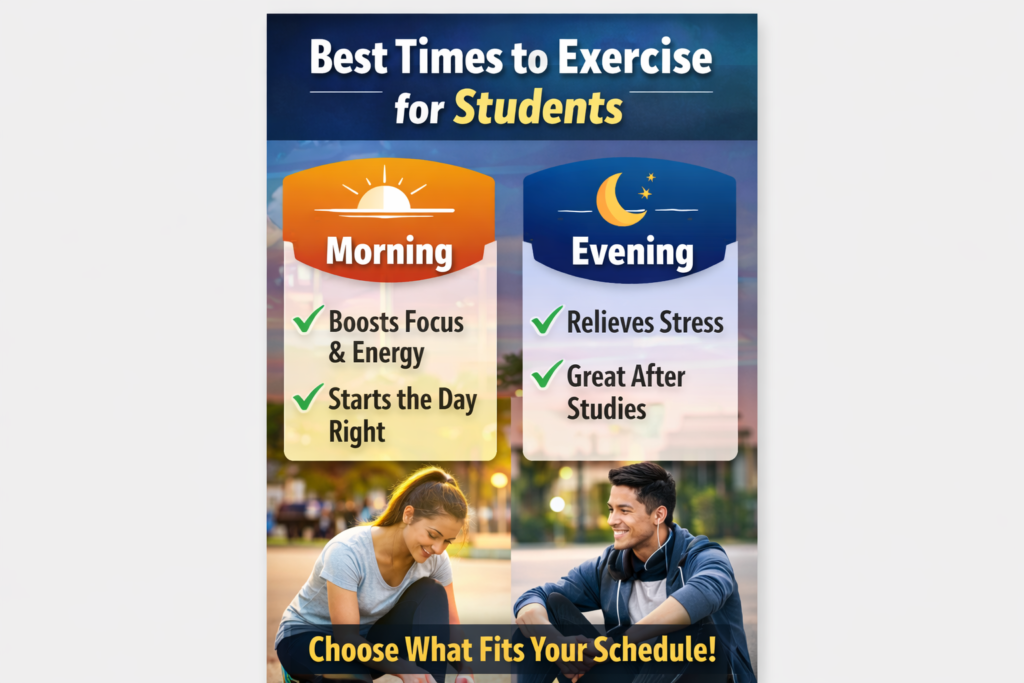
- Morning: Best for focus, discipline, and energy throughout the day
- Evening: Good for stress relief after studies
👉 Choose a time that fits your daily schedule and stick to it.
Daily Exercise Tips for Students
- Start slow and increase intensity gradually
- Stay hydrated before and after workouts
- Maintain a balanced diet
- Avoid excessive screen time
- Get 7–8 hours of sleep
- Be consistent rather than intense
Common Mistakes Students Should Avoid
- Skipping warm-up and stretching
- Overtraining without rest
- Irregular workout schedule
- Ignoring posture during exercise
- Not combining exercise with proper nutrition
Sample Daily Exercise Schedule for Students
Below is a simple example of how students can structure a daily exercise routine.
| Time | Activity |
| 6:30 AM | Warm-up + Cardio |
| 6:50 AM | Strength Exercises |
| 7:10 AM | Stretching & Meditation |
| Evening (Optional) | Light walking or sports |
My Personal Experience
From my personal experience, following a simple daily exercise routine helped improve my focus, posture, and energy levels during long study hours. Even light workouts and stretching made it easier to stay active and manage stress. Over time, consistency mattered more than intensity, and it became a natural part of daily life rather than a burden.
Conclusion
A well-planned daily exercise routine for students is essential for staying healthy, focused, and confident. You don’t need expensive equipment or long hours—just 30–45 minutes daily can make a huge difference in physical and mental well-being. Start today, stay consistent, and watch your academic performance and energy levels improve naturally.
Author Bio:
Gajpati Dora is a fitness and personal development writer who shares practical workout routines and lifestyle tips for students and beginners. Through gajpatidora.com, he focuses on simple habits that support healthy and productive daily routines.
🔹 Frequently Asked Questions (FAQ)
1. How much exercise should a student do daily?
Students should aim for 30–60 minutes of physical activity every day, including cardio, stretching, and strength exercises.
2. What is the best exercise routine for students at home?
A simple home routine including warm-up, stretching, cardio (jumping jacks or skipping), bodyweight exercises (squats, push-ups), and cool-down is ideal for students.
3. Can exercise improve academic performance?
Yes, regular exercise improves memory, concentration, focus, and mental clarity, which directly helps in better academic performance.
4. Is morning exercise better for students?
Morning exercise is considered best as it boosts energy, discipline, and focus throughout the day, but students can also exercise in the evening if it suits their schedule.
5. Do students need gym equipment for daily exercise?
No, students can stay fit using bodyweight exercises at home without any gym equipment.
6. Can daily exercise reduce stress and exam pressure?
Absolutely. Exercise helps release endorphins, which reduce stress, anxiety, and exam-related pressure.
⚠️ This article is for informational purposes only and is not a substitute for professional medical or fitness advice. Students with medical conditions or injuries should consult a qualified healthcare professional before starting any exercise routine.